TSA Home
2004 Annual Meeting
 

Legislative and Scientific
Program Objectives

Target Audience

This program is designed for anesthesiologists and resident anesthesiologists who are members of the Texas Society of Anesthesiologists and their colleagues in the surrounding states.

Educational Methods

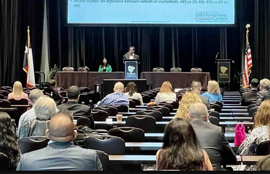
The educational methods will consist of didactic lectures, workshops and hands-on sessions with opportunities for Q&A from the audience and a panel discussion.

Accreditation

This activity has been planned and implemented in accordance with the Essential Areas and Policies of the Accreditation Council for Continuing Medical Education (ACCME) through the joint sponsorship of Texas Medical Association and Texas Society of Anesthesiologists. The Texas Medical Association is accredited by the ACCME to provide continuing medical education for physicians.

The Texas Medical Association designates this continuing medical education activity for 29.5 Category 1 credits toward the AMA Physician's Recognition Award. Each physician should claim only those hours of credit that he/she actually spent in the educational activity.

Texas Medical Association has designated the presentations "Physician Heal Thyself" and "Are We Ethical?" for two hours in ethics/professional responsibility education.


Legislative Program Objectives

Upon completion of this activity, participants should be able to:

  • Discuss legislative issues concerning physicians in practice.
  • Discuss the Sunset Review Process.
  • Recognize the benefits of participation in the TSA Key Contact Program.
  • Recognize the benefits of continued legislative advocacy.
  • Discuss Federal Legislation, regulations and the impact on patient care.

Scientific Program Objectives

Upon completion of this program, participants should be able to:

  • Discuss anesthesia in austere environments, reviewing the types of cases and anesthetics that were provided as analyzing areas where anesthesia could be improved.
  • List anesthesiology workforce challenges, recent trends in physician and CRNA matriculation and progression in training programs, issues regarding the demographics of current workforce members, and projections of workforce demand. Discuss implications of this data on current recruitment and retention effort.
  • Review the methods and applications of EEG monitoring.
  • Review the anatomy and physiology of electrophysiological monitoring.
  • Review methods and applications of evoked potential monitoring.
  • Discuss the current literature on the incidence, severity, and duration of post-operative cognitive dysfunction in elderly surgical patients.
  • Outline current hypothesis and studies underway to better define the cause of postoperative cognitive dysfunction in elderly surgical patients.
  • Evaluate current morbidity and mortality statistics associated with anesthetizing pediatric patients.
  • Identify the factors which impact the likelihood of an adverse outcome in pediatric patients.
  • Analyze the risk levels for morbidity and mortality in pediatric patients anesthetized in their own practice.
  • Identify five different oxygen monitoring methods they can utilize on patients.
  • Review a full diagnostic echocardiographic examination for the patient in the perioperative setting.
  • Analyze a systematic approach to examinations of myocardial function and evaluation of the aortic and mitral valves.
  • Discuss the correct and potential uses of DDAVP, aminocaproic acid, tranexamic acid and aprotinin, as well as associated risks.
  • Demonstrate regional anesthetic techniques of the extremities for clinicians and discuss their use for surgical anesthesia and postoperative analgesia, as well as their potential complications.
  • Determine the appropriateness of blood transfusion of each patient presented.
  • Discuss the deleterious effects of over hydration and new evidence suggesting improved postoperative outcome with judicious
    fluid administration.
  • Discuss the advantages of using colloids over crystalloids in improving postoperative outcome.
  • Discuss the pathophysiology of positive pressure ventilation on myocardial function and compare static vs dynamic pressure indices to assess preload.
  • Discuss current ASA issues and concerns.
  • Elucidate the epidemiology of drug use among physicians.
  • Discuss the pathopsychology that leads to dysphoria and self medication.
  • Examine the factors that can reduce drug abuse and physician suicide.
  • Detail the ethical principles and examine how they apply as individuals and as professionals.
  • Detail the major causes of denial of payment and how best to appeal.
  • Develop a methodology for assessing staffing needs and determining the cost of coverage.
  • Discuss the issues that the ASA Committee on Economics is addressing.
  • Discuss the functions of various parts of the anesthesia machine.
  • Identify complications related to malfunctioning of various parts of the anesthesia machine.
  • Predict the incidence of aspiration.
  • Discuss the prophylactic measures to prevent aspiration.
  • Detail the risk factors and management of aspiration.
  • Discuss how to balance the goals of ambulatory surgery with Central Neuraxis Blockade and review the intraoperative and postoperative risks of CNB.
  • Discuss the physiological and anatomical basis for Continuous Spinal Epidural Anesthesia (CSE).
  • Detail the latest theories for explaining and treating CSE complications.
  • Analyze the ASA Closed Claims Analysis and 2003 Practice Guidelines; recognize a difficult airway; and discuss the pros and cons of regional anesthesia in a patient with known difficult airway and the advantages of securing the airway in the awake patient.
  • Detail pharmacology and physiology of commonly used oral (Aspirin, Clopidogrel, dipyridamole) and intravenous (abciximab, eptifibatide, tirofiban) anti-platelet agents.

TSA Home | Annual Meeting | Next


Texas Society Of Anesthesiologists
401 W 15th Suite 990
Austin, TX 78701-1665
Phone 512-370-1659
Fax 512-370-1655
Email info@tsa.org